
























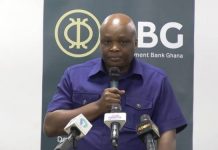























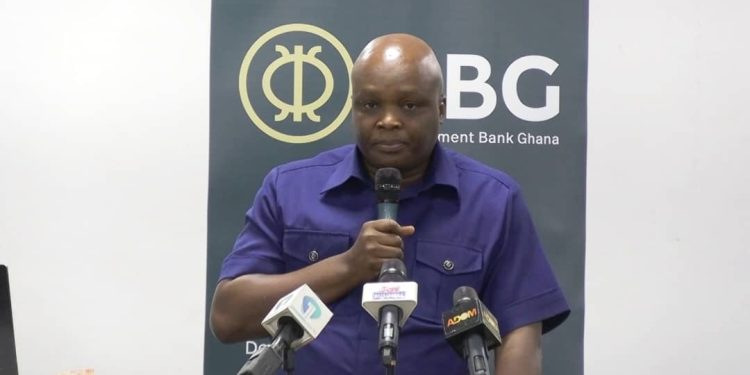
The Chief Executive Officer of Development Bank Ghana, Prof. Randolph Nsoh-Ambala, has explained that government’s $500 million oil palm financing facility is intended to catalyse private sector investment and transform Ghana’s oil palm industry.
The facility, announced in the 2026 Budget by Finance Minister Dr. Cassiel Ato Forson, will provide long-term financing for players in the oil palm value chain, including a five-year moratorium on both principal and interest payments.
Speaking at a roundtable discussion on oil palm financing in Accra, Prof. Nsoh-Ambala explained that the initiative is designed to restructure the sector, improve productivity, and strengthen local processing capacity while reducing the country’s dependence on imported palm oil.
“There have been some confusions around what this represents,” he noted. “What government seeks to do with this fund is to transform the various fragmented production units within the value chain into a coherent ecosystem that will allow us to achieve supply chain sovereignty—reducing our dependence on imports while meeting local demand.”
According to him, the facility aligns with government’s broader strategy of leveraging public financing to crowd in private sector capital for priority sectors of the economy.
“Like all government priority projects, the underlying philosophy is that for us to achieve sustainability, we must create the conditions for the private sector to play a leading role,” he added.
Meanwhile, the President of the Oil Palm Development Association of Ghana, Paul Kwabena Amaning, has called on government to prioritise organised farmer groups and cooperatives in the rollout of the facility.
He stressed that structured support for farmer associations is critical to boosting productivity, improving efficiency, and expanding market access within the oil palm sector.
“The financing facility must be carefully designed to support organised groups and associations, strengthen agro-systems, improve processing capacity, and promote value addition at the community level,” Amaning stated.
He further urged government to implement the programme within a clear timeline to ensure tangible results.
“Within the first six months, we should see structures in place and pilot funding begin. Within 12 to 18 months, we should see expansion in plantations, replanting efforts and processing. And within three to five years, we should see real results—reduced imports and increased local production,” he said.
The $500 million facility is expected to support plantation expansion, enhance domestic processing, and create jobs across Ghana’s oil palm value chain while strengthening the country’s drive toward greater self-sufficiency in palm oil production