






















































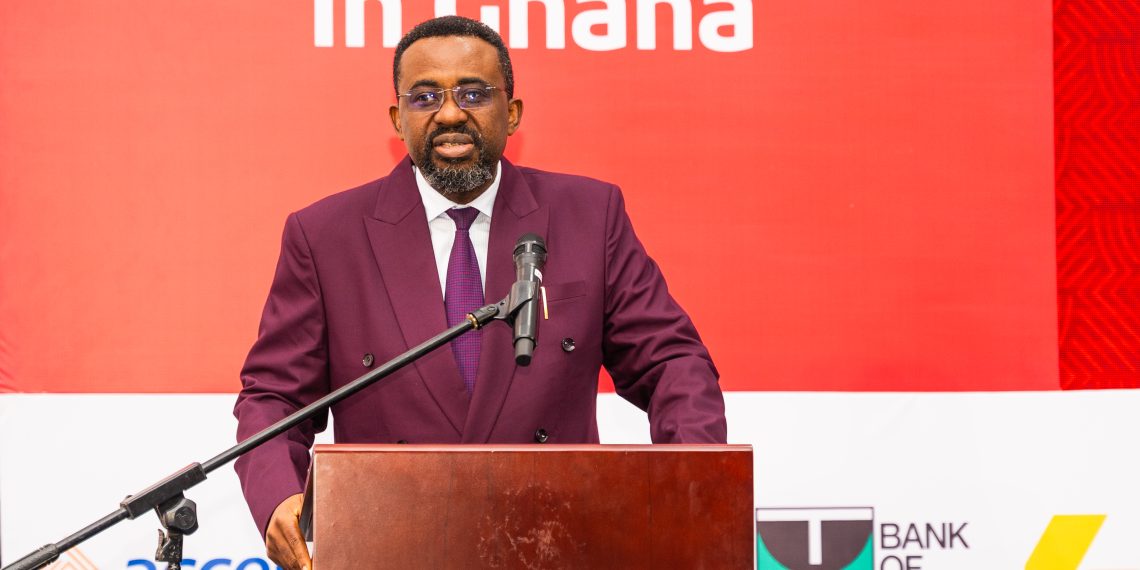
Governor of the Bank of Ghana, Dr. Johnson Asiama, has disclosed that Ghana recorded nearly $7.8 billion in remittance inflows by the end of 2025, reinforcing the growing importance of diaspora funds.
The figure marks a sharp increase from about $4.6 billion recorded in 2024, highlighting a steady upward trend in inflows largely driven by Ghanaians living abroad, particularly in the United States, which remains the country’s single largest source of remittances.
Speaking at a roundtable on the “Central Bank Bridge: Remit2Invest” initiative in the United States on Sunday April 19, 2026, Dr. Johnson Asiama indicated that remittances now account for roughly six percent of Ghana’s gross domestic product and have surpassed foreign direct investment.
The governor also pointed to improvements in Ghana’s macroeconomic environment over the past year, including easing inflationary pressures, a more stable exchange rate, and stronger gross international reserves.
These developments, he said, are aimed at restoring investor confidence and ensuring a more predictable economic framework.
“Over the past year, our macro-economic framework has been recalibrated. Recalibrated to ensure stability, to ensure predictability, and to ensure investor confidence. Inflation dynamics, as some of you will be aware, these have improved significantly.
“The external sector remains resilient and our financial system continues to demonstrate soundness and adaptability. Our gross international reserves have strengthened, improving imports cover while the cedi has shown considerable resilience supported by appropriate policy tightening and effective liquidity management.
“My objective is to set up, with clarity, the role of the Bank of Ghana and to engage you on how we can transform our remittance flows into formal foreign exchange and channel them into investable capital through the financial system.
“Remittance inflows remain a cornerstone of Ghana’s external sector. In 2024, before I came on, Ghana recorded approximately $4.6 billion in remittance. This flows continues to rise through last year, 2025. We recorded nearly $7.8 billion by the end of last year. So, at roughly 6% of GDP in terms of the real term, remittances now exceed foreign direct investment, underscoring their sustained importance,” he said.
Dr. Johnson Asiama stressed the need to transition from consumption-driven remittances to investment-oriented diaspora capital.
He further highlighted the broader strategic value of the Ghanaian diaspora, describing it as a key source of foreign exchange, a conduit for technology transfer and innovation, and a bridge to global capital markets.
He emphasized that harnessing this potential requires structured engagement and targeted policy measures.
“The Ghanaian diaspora is a strategic asset. The diaspora represents, first, a critical source of foreign exchange inflows, second, a powerful channel for technology transfer and innovation, and third, an important bridge to global capital markets.
“However, unlocking this potential requires a deliberate transition-a transition from consumption driven remittances to investment-oriented diaspora capital,” he added.