























































President John Dramani Mahama has revealed that Ghana suffered a significant funding gap in its health sector following the closure of programmes previously supported by the United States Agency for International Development (USAID), warning that declining external support is placing added pressure on healthcare delivery across Africa.
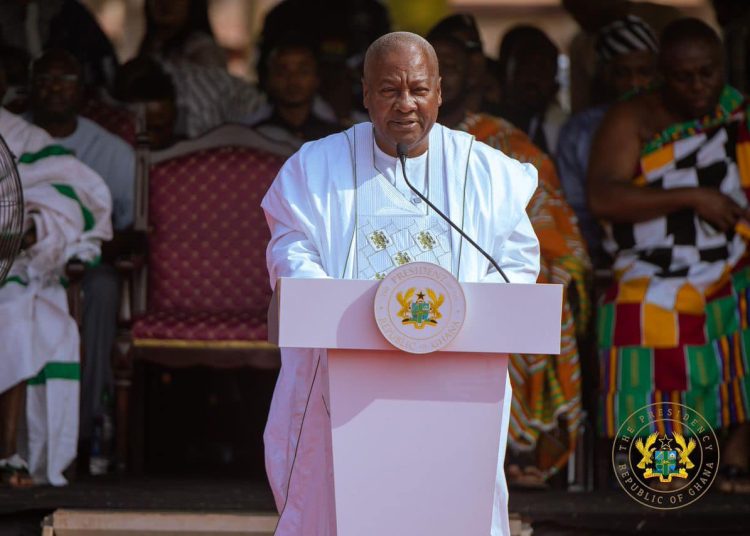
Speaking at the 79th World Health Assembly in Geneva, Switzerland, he disclosed that Ghana lost about $78 million in health financing after the withdrawal of USAID-backed interventions.
He explained that the affected funding had been directed into key public health areas, including maternal and child healthcare, malaria control, HIV and AIDS response, nutrition programmes, and the supply of antiretroviral medicines.
President Mahama noted that the reduction in support is not isolated to Ghana, but reflects a broader trend across the continent, where bilateral and multilateral health financing has declined significantly since 2025.
The shrinking donor support he lamented is creating serious gaps in essential healthcare services, particularly in low- and middle-income countries that still depend heavily on external assistance to sustain critical health interventions.
According to him, the loss of such funding exposes the fragility of health systems that rely on external partners, stressing the need for stronger domestic investment and more resilient financing models to safeguard continuity in essential services.
“In Ghana, health financing from bilateral and multilateral partners has significantly decreased since 2025. Ghana lost 78 million dollars in health funding following the closure of USAID programmes.
“This funding mainly went into malaria control programmes, maternal and child health services, HIV and AIDS interventions, and nutrition programmes,” he said
The situation he stated reinforces the urgency for reforms in global health financing structures to safeguard critical health gains and build more resilient national systems.